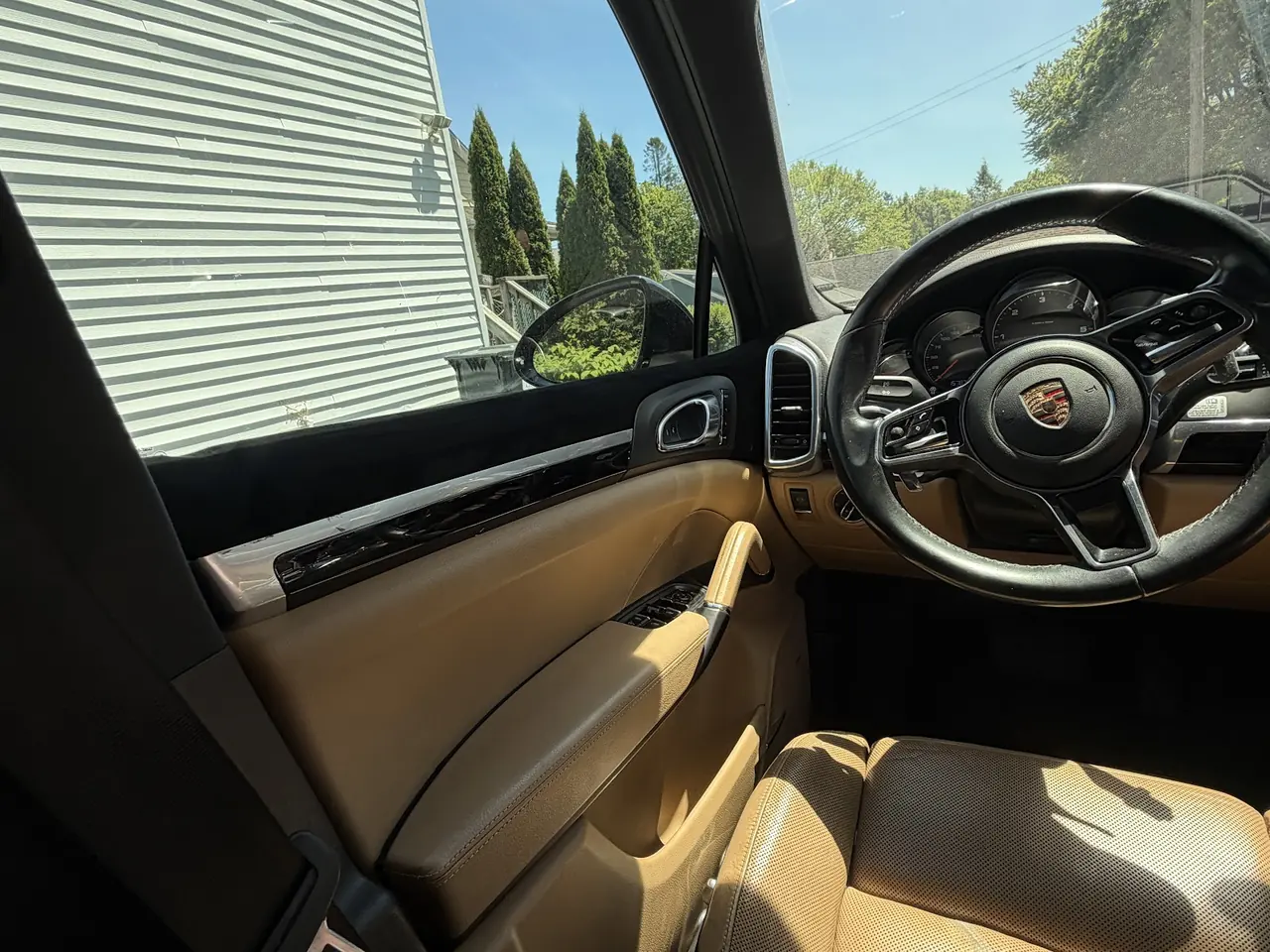
Full-grain and corrected-grain
Nearly every hide sold as automotive leather is one of two things. Full-grain
keeps the outer surface of the skin intact — the tight, dense fibre layer
the animal actually grew. It shows the occasional scar and it will never be
perfectly uniform. That is the point. It breathes, it takes a patina, and the
surface you touch is the leather itself.
Corrected-grain is sanded to remove the marks, embossed with a printed grain,
then sealed under pigment and a polyurethane top coat. It looks flawless and it
shrugs off a dog's claws on day one. But the coat is what you see. When it wears
through — the driver's outer bolster goes first, every time — it does
not develop character. It looks like paint coming off, because that is what is
happening.
Most factory interiors are corrected-grain for exactly that reason: it behaves
predictably through a warranty period. We will fit either. We will just tell you
which one you are buying.
Nappa is a feel, not a grade
Nappa describes a tannage and a finish rather than a quality tier. It is a full-
or top-grain hide, aniline or semi-aniline dyed, with a thin top coat instead of
a thick one. That thin coat is where the softness comes from, and it is also why
it marks more easily — less coat, less barrier. Automotive Nappa is almost
always semi-aniline, because a true aniline hide in a car with south-facing glass
is a short story.
Alcantara, suede, and the difference
Alcantara is neither leather nor suede. It is a non-woven composite —
polyester microfibre bound in polyurethane — engineered for grip and for
staying cool. On a dash top it kills reflection into the windscreen; on a ceiling
it does not turn into a griddle in August. It wears by matting and pilling where
hands, elbows, and seat belts land, and that wear is permanent. You can clean it.
You cannot lift the nap back up.
Real suede is a split hide buffed to a nap. Softer, stains faster, and goes shiny
where it is rubbed. On a steering wheel it is beautiful for two years and tired by
five. We will fit it where it is asked for, and we say that first rather than
after.
Vinyl, honestly
Modern automotive vinyl on a knit backing is not the cracked bench seat of 1974.
Under sustained UV it outlasts leather, which is why it belongs on dash tops,
convertible surrounds, and anything that lives in the sun. It does not breathe, so
it runs hot against skin. Plenty of factory door panels are vinyl below the
armrest and leather above it, and nobody has ever noticed.
Foam, which is usually the real problem
A seat that looks tired is more often collapsed foam than a failed cover. Bolster
foam breaks down where you slide across it every day, the cover then has nothing
to sit on, and it wrinkles into the void. We rebuild bolsters in high-density
foam, add a scrim layer where the cover would otherwise chew itself against the
frame, and only then pull a cover over it. Skip that and you have paid for leather
to sag in the same shape as before.
Thread and stitch
Thread is a UV decision before it is anything else. Bonded nylon is stronger and
it degrades in sunlight; bonded polyester gives up a little strength and holds its
colour and tensile life far longer. Anything the sun touches gets polyester. Nylon
lives in seams that are buried.
Weight matters as much as material. A construction seam runs a fine thread and
disappears. A topstitch meant to be seen runs heavier, so the stitch reads as a
line rather than a dotted suggestion. Contrast topstitch is the most photographed
detail in any interior and the least forgiving — it shows every wobble, so
it goes down on the bench under a needle, never in the car.
- French seams, where the allowances are folded under and topstitched flat — no raw edge, and the leather carries the load instead of the thread alone.
- Diamond and quilted panels, stitched to a foam-and-scrim laminate before assembly. Skip the laminate and the pattern pulls out of square the first time it is stretched.
- Perforation over heated or ventilated seats, laid out so the holes land where the airflow is.
- Sew-in listings and hog rings that pull the cover down into the seat's contour. That is what stops new leather from looking like a slipcover.
How it ages, and where
Leather does not die of use. It dies of heat and UV pulling the plasticisers out
of the finish, until the finish goes brittle and cracks, and the crack is what
lets the moisture out of the hide underneath. It shows up in the same three places
every time: the dash top, the top of the rear seat back under the glass, and the
driver's outer bolster. Perforated panels are more fragile than solid ones, simply
because there is less material carrying the same load.
Conditioner cannot feed a coated hide — the coat is a barrier, that is its
entire job. What conditioning actually does is keep the surface clean and slightly
supple so grit stops sanding the finish every time you sit down. Park in shade,
wipe it down, and a good hide will outlast the car.
Where interiors meet the rest of the shop
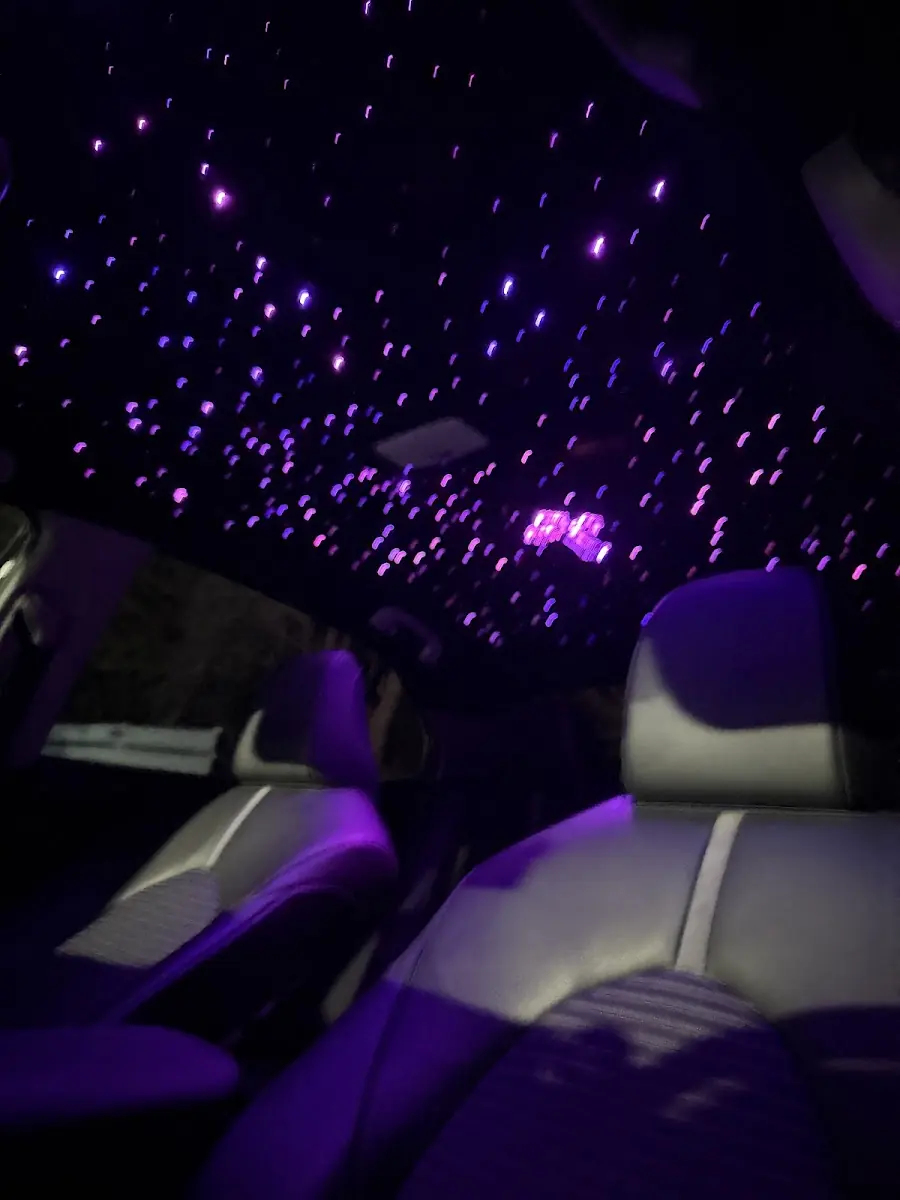
The upholstery bench and the wiring bench run independently, but they finish more
jobs together than apart. A re-wrapped ceiling is the natural home for a
fiber-optic starlight headliner,
because the panel is already out and the fibres go in before the material is
heat-set. Re-skinned door cards are the cheapest time in a car's life to run
ambient footwell and door lighting, since
the trim is off and the loom is exposed. And if the outside is going to match the
inside, custom headlight and taillight
work happens on the same visit rather than a second one.